Unlicensed works: what to check before buying a home
A practical checklist for checking works, areas, annexes, balconies and urban planning risk before signing the CPCV in Portugal.
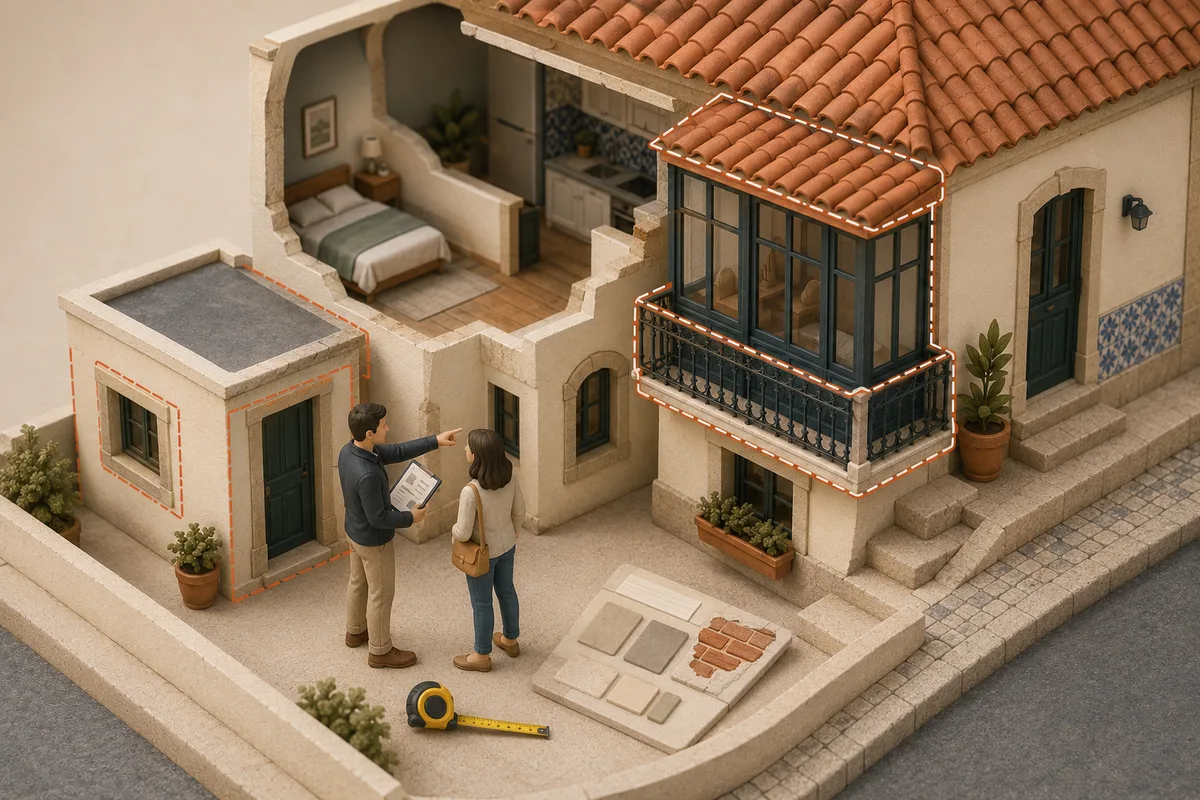
A home can look beautifully renovated and still raise important questions: an enclosed balcony, a garage turned into a bedroom, an annex, a pool, an attic used as living space or altered walls. Before signing the CPCV, check whether the real home matches the home described in the documents.
Key takeaways
- Registry, tax records and energy certificates do not prove every works issue.
- Ask for the municipal file and compare approved plans with the real home.
- If there is doubt, resolve it before the CPCV or write conditions into it.
Why this matters more than it seems
The risk is not only "can the deed be signed?". The better question is: does the built, visited and advertised property match what is approved, registered and allowed to be used?
Since 1 January 2024, under Portugal's Simplex Urbanistico reform, the sale process became less dependent on showing the former use authorization and housing technical file at the deed stage. That does not make irregular works safe. In practice, it means the buyer should check earlier.
Documents to compare before the CPCV
Start with the normal purchase documents, but do not stop there. They are useful for raising questions, not for closing the analysis.
| Document | What it helps check | Limit |
|---|---|---|
| Permanent land registry certificate | Ownership, charges, mortgages and registered description. | It does not prove every work was approved by the municipality. |
| Property tax record | Tax article, areas, use and taxable value. | It is fiscal; urban planning legality is a separate question. |
| Municipal file | Approved projects, final plans, licences, communications and use. | It should be reviewed with an architect, engineer or competent technician. |
| Energy certificate | Energy performance and required sale information. | It does not prove that annexes, extensions or room conversions are licensed. |
The critical step is comparing the visit with the municipal file: areas, floors, facades, balconies, annexes, garage, attic, basement, pool, terraces and room use. If the approved plan shows a garage and the visit shows a bedroom, that gap needs an explanation before you pay a deposit.
Common red flags
Not every red flag means a serious defect. But each one justifies a direct question to the seller, municipality or technician.
Check carefully
- Advertised area differs materially from registry or tax records.
- Enclosed balcony, sunroom or visible facade alteration.
- Garage, storage, basement or attic used as a bedroom.
- Annex, pool, pergola, covered terrace or later extension.
- Structural walls removed or large new openings.
- Seller has no plans, licence, communication or municipal evidence.
- Vague answer: "it was always like this" or "you can legalize later".
When the seller says the works are old, simple or exempt, ask for evidence or a technical opinion. Works exempt from licensing may still need to comply with municipal plans, easements, safety, structure, heritage, condominium and land-use rules.
Who should verify
Use the right professional for each doubt. A lawyer or solicitor helps with CPCV conditions, seller declarations, breach and legal consequences. An architect compares the property with the approved project and assesses whether the work may be regularized. An engineer should check structural changes. The municipality confirms the file and possible legalization. The bank confirms whether it accepts the property as collateral.
Apartments also carry condominium risk
In an apartment, works can create two layers of risk: municipal and condominium. An enclosed balcony, altered facade, covered terrace, occupied attic, annexed storage room or structural wall change may involve common parts, the horizontal property title, minutes and approvals.
Ask for recent minutes, regulations, the condominium charges declaration and, where works affect common parts or the building's appearance, proof of approval. Do not assume "exclusive use" means free ownership to build.
How to protect this in the CPCV
The worst time to discover unlicensed works is after paying a large deposit. If the purchase depends on urban planning legality, mortgage approval or technical validation, that should be written down.
The CPCV can require the seller to deliver municipal documents by a fixed date, declare known works, regularize issues before the deed, pay legalization costs or allow termination if the bank, municipality or technician does not validate the situation. A professional should draft the wording.
FAQ
Can a home with unlicensed works be sold in Portugal?
Does the energy certificate prove the works are legal?
Can I legalize the works after buying?
Next step
Before signing the CPCV, run a simple check: documents, municipal file, technical comparison and written questions to the seller. If something does not line up, delay signing or turn the doubt into a clear contract condition.
More guides
August 7, 2026
Damp and water ingress: investigate before the CPCV
How to record signs, diagnose the source, check the condominium and require proof of repair before buying a home in Portugal.
August 5, 2026
Electrical installation when buying: check before the CPCV
How to check the electrical file, condition, power capacity and responsibilities before buying a home in Portugal.