Condominium minutes: what to check before buying an apartment
A practical checklist for reviewing minutes, debts, reserve funds and approved works before buying an apartment in Portugal.
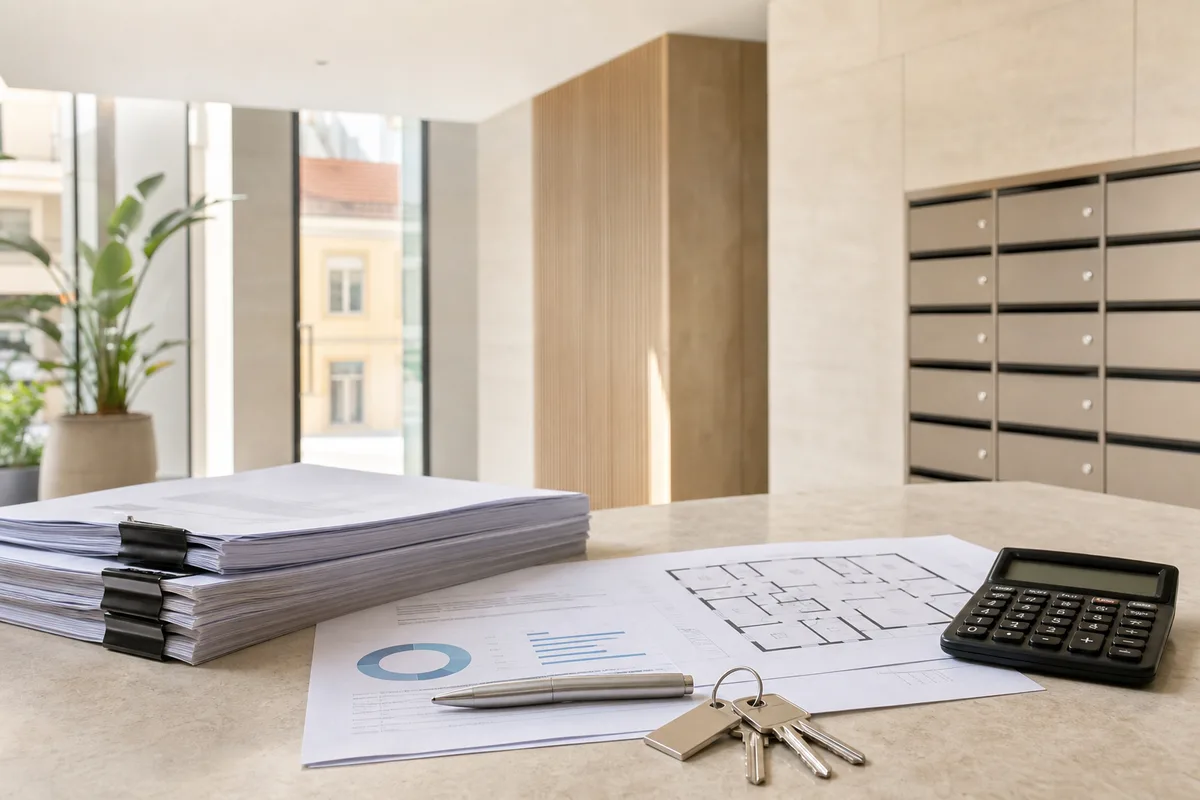
Buying an apartment in Portugal also means joining a condominium. Before signing the CPCV or moving to the deed, do not check only the private unit. Check the building, minutes, debts and approved works too.
Key takeaways
- The administrator declaration helps confirm charges and debts.
- The minutes reveal approved works, disputes and future costs.
- A weak reserve fund can change the apartment's real price.
Ask for the administrator declaration
When selling an autonomous unit, the owner should request a written declaration from the condominium administrator listing existing charges, amounts, nature and payment deadlines. Portuguese law gives the administrator up to 10 days to issue it.
Do not treat this as paperwork. If the buyer expressly waives the declaration, they may accept responsibility for the seller's condominium debts. If the deal is being rushed, this is exactly the point to slow down and confirm.
Read the minutes, not only the declaration
A no-debt declaration can be accurate and still be incomplete for your decision. Meeting minutes show the building's history: approved works, extraordinary payments, disputes, unpaid quotas, lift problems, facade issues, roof repairs, garage issues or other common-area concerns.
Ask for at least the last two or three years of condominium minutes. Look for decisions already approved but not fully paid yet.
Confirm works and extraordinary payments
The common risk is not the monthly fee. It is a large building cost that appears afterwards: facade, roof, pipes, lifts, waterproofing, garage or safety systems.
Ask:
- Which works have been approved?
- Have quotes been requested or chosen?
- Have extraordinary payments already been decided?
- What are the payment due dates?
- Will the seller pay any instalment before the deed?
If the answer is vague, bring it into the CPCV. The contract should clarify who pays overdue charges, approved charges and future payments.
| Risk signal | What to ask |
|---|---|
| Very low monthly fee | Does the reserve fund cover predictable repairs? |
| Minutes with approved works | Who pays overdue and future instalments? |
| Older facade, roof or lift | Have quotes been requested or decisions prepared? |
Check the reserve fund
Each condominium should have a common reserve fund for building conservation costs. A low monthly fee can look attractive, but it may hide a building with no savings for predictable repairs.
Ask for the reserve fund balance, annual accounts and current budget. If the building has a lift, garage, older facade or signs of damp, a weak reserve fund should matter in the negotiation.
Ask for the condominium rules
The condominium rules help you understand how you may use the unit and common areas. Check rules on parking, storage rooms, interior works, noise, pets, balconies, drying racks, short-term rental and shared areas.
It is also worth confirming insurance, maintenance contracts and any notices from public authorities about safety, licences, lifts or mandatory works.
Checklist before moving ahead
Before the CPCV, ask for:
- Administrator declaration on condominium charges and debts.
- Recent condominium meeting minutes.
- Annual budget, accounts and quota schedule.
- Common reserve fund balance.
- Information on approved or expected works.
- Condominium rules.
- Insurance confirmation and relevant contracts.
FAQ
Is the administrator declaration enough?
How many years of minutes should I request?
Can approved works support price negotiation?
Next step
If you are buying an apartment, treat the condominium as part of due diligence. The private unit may look perfect, while the building can carry costs, rules or decisions that change the real price of the purchase.
More guides
July 13, 2026
Horizontal property: check before buying
How to check the apartment fraction, common parts, exclusive use, permillage, plans, condominium records and CPCV clauses before buying.
August 6, 2026
EV charging in a condominium: check before buying
How to verify the space, route, capacity, metering, condominium process and costs before relying on EV charging when buying.