Horizontal property: check before buying
How to check the apartment fraction, common parts, exclusive use, permillage, plans, condominium records and CPCV clauses before buying.
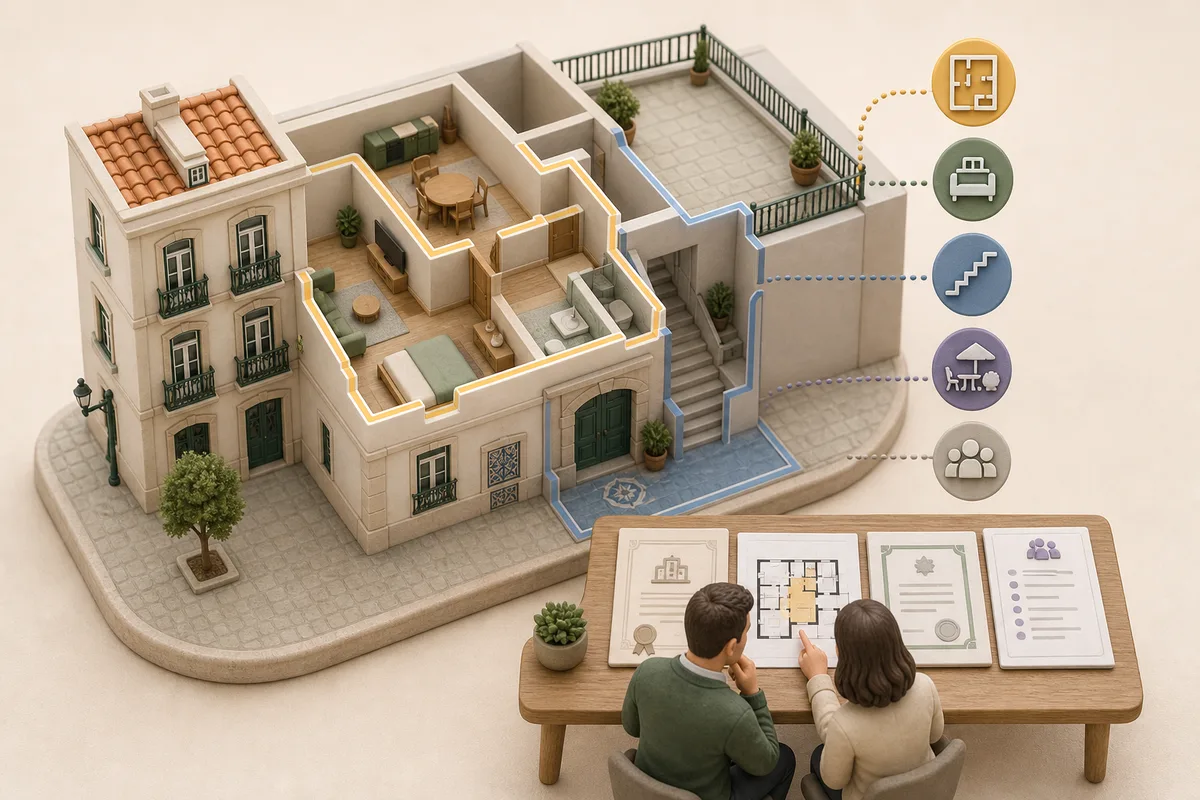
When you buy an apartment in Portugal, you are not only buying "the two-bedroom flat on the third left". You are buying an autonomous fraction in a horizontal property building, with a share in the common parts and rules that can affect terraces, patios, attics, corridors, roofs, garages and exclusive-use areas.
The expensive mistake is relying only on the viewing. An open door, a key or long-term use does not prove that an area legally belongs to the apartment. Before the CPCV, the horizontal-property title should match the registry certificate, tax record, plans, condominium documents and what you saw in the building.
Key takeaways
- Ask for the horizontal-property title before paying a large deposit.
- Check whether areas such as terrace, patio, attic, storage or garage are private, common or exclusive-use common parts.
- If the promised area is unclear in the documents, put an objective condition in the CPCV.
Why this changes the purchase
In horizontal property, each owner has a private part: the autonomous fraction. They also hold a share in the building's common parts. The constitutive title is the document that defines the composition of the fractions, their relative value and, often, how certain areas are allocated to a fraction.
This matters because two areas can look identical at the viewing and carry very different rights. A terrace may belong to the fraction, be a common roof area, or be a common part allocated for exclusive use. A basement space may be a private garage, a separate autonomous fraction or a common area used by habit.
Documents to compare before the CPCV
A registry certificate on its own is not enough. The goal is to compare several documents and confirm that they all point to the same fraction, area and use.
Ask for and compare
- permanent land-registry certificate, with fraction letter and charges;
- tax record, with article, fraction, use, areas and fiscal titleholder;
- horizontal-property title and any later amendments;
- approved plans, where available, to connect documents to the physical space;
- condominium rules and minutes mentioning use, works or disputes;
- condominium non-debt statement, without treating it as a substitute for reviewing the title.
If you are using a mortgage, send the correct information to the bank early. A wrong fraction, an undocumented promised area or a garage treated separately can delay valuation, mortgage registration and completion.
What may be private, common or exclusive-use
The difficulty is not only the names. It is knowing which right follows the apartment you are buying.
| Area | Main question | Risk if ignored |
|---|---|---|
| Terrace or patio | Is it part of the fraction, or a common roof/area with exclusive use? | You may pay as if it were private and later face use, works or maintenance limits. |
| Attic, basement or annex | Is it described in the title, registry certificate or plans? | You may buy an informal use that the condominium or municipality can challenge. |
| Stairs, corridors and entrance | Is there private occupation of space that should serve everyone? | Neighbour disputes and possible obligation to remove objects or works. |
| Garage or storage | Is it part of the apartment, a separate fraction, common area or simple use? | Problems with price, financing, completion and future use. |
Also check the permillage. It can affect condominium charges, contributions to works and voting weight in some decisions. A small difference on paper can matter when the building approves expensive repairs.
Red flags during the viewing and negotiation
Some phrases should slow the purchase until documents arrive. They do not mean the deal is bad, but they do mean the proof is missing.
Signals to treat carefully
- "this terrace is ours, but on paper it appears as common";
- "the enclosed balcony was already like this when we bought";
- "everyone uses the basement this way";
- "the old plan does not match, but there has never been a problem";
- "the attic is not in the deed, but it always belongs to the top floor";
- "the manager confirmed it by phone";
- "let us sign now and fix the paperwork later".
Ask for written confirmation and documents. If the area is essential to you, an informal answer from the seller or estate agent is not enough.
How to protect yourself in the CPCV
The CPCV should reflect what is being bought. If an area or use right is important, identify it with the same detail used in the documents.
Clauses to discuss
- full identification of the fraction, tax article, registry description and letter;
- list of included areas and the document supporting each one;
- delivery of the horizontal-property title and plans by a clear deadline;
- seller statement that there is no undue occupation of common parts;
- condition for satisfactory review by lawyer, solicitor, bank or notary;
- right to terminate or renegotiate if an advertised area cannot follow the purchase;
- clear consequence for the deposit if the issue blocks completion or financing.
If the seller resists providing the title or clarifying an important area, do not replace proof with speed. Reduce the deposit, delay signing or write an objective condition. Confirming before completion is cheaper than arguing after the deed.
FAQ
Is the registry certificate enough to understand the whole fraction?
Is an exclusive-use terrace the same as private ownership?
Can I sign the CPCV while waiting for the title?
Next step
Before paying the deposit, ask the seller for a copy of the horizontal-property title and mark, on a plan or list, everything you believe is included: fraction, annexes, terraces, patios, garage, storage and exclusive-use areas. Anything without document support should enter the CPCV as a pending point.
More guides
June 12, 2026
Condominium minutes: what to check before buying an apartment
A practical checklist for reviewing minutes, debts, reserve funds and approved works before buying an apartment in Portugal.
August 6, 2026
EV charging in a condominium: check before buying
How to verify the space, route, capacity, metering, condominium process and costs before relying on EV charging when buying.