Easements when buying in Portugal: access, paths and burdens
How to check rights of way, access, pipes, water, drainage and other easements before the CPCV and deed in Portugal.
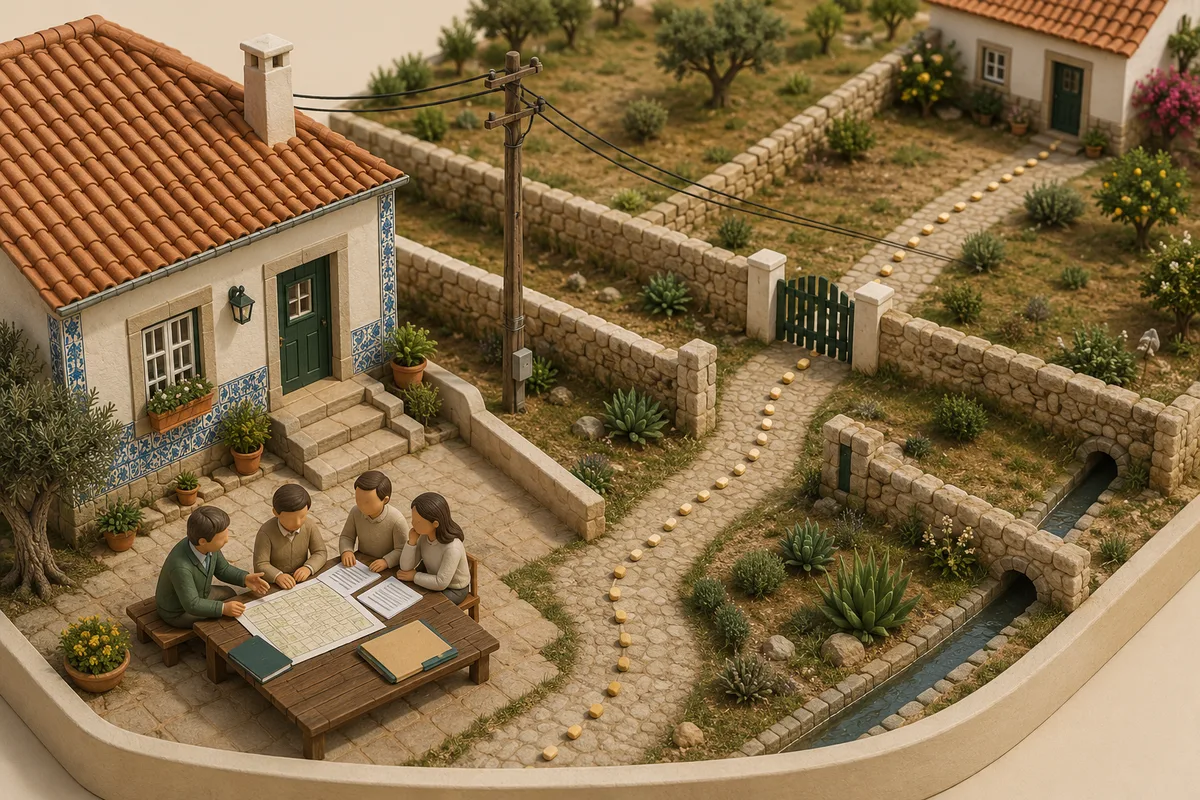
An easement can look like a neighbourly detail: a path used for years, a shared gate, a pipe crossing the land, a drainage ditch or a utility pole in the corner of the property. For a buyer, it can be much more than that.
If the home needs access across someone else's land, or if someone else has a right to cross the property you are buying, the risk should be clear before the CPCV. This is not only a legal issue. It can affect privacy, works, mortgage approval, bank valuation, resale and your relationship with neighbours after completion.
Key takeaways
- An easement may follow the property even after the sale.
- The land registry certificate is essential, but visible signs on site also matter.
- Before the CPCV, check access, route, width, use, burdens and disputes.
What an easement is
In simple terms, a Portuguese servidão is a burden on one property for the
benefit of another. The property that bears the limitation is the prédio serviente. The property that benefits from it is the prédio dominante.
The most common example is a right of way: a home or plot needs to cross a neighbouring property to reach the public road. But the issue can also involve water, sewage, drainage, electricity, telecoms, views, windows, walls, eaves, ditches, wells or agricultural paths.
The two risks to separate
The first question is which side of the easement the property is on.
| Situation | Practical question |
|---|---|
| The home needs access across someone else's land | Do I have legal, clear and sufficient access for living, works, deliveries and future resale? |
| Someone else crosses the property I am buying | Where do they pass, how wide is it, by what means, at what times and with what privacy impact? |
| Pipes, cables, ditches, poles or water cross the property | Does this limit building, garden, pool, fencing, maintenance or resale value? |
| The seller says there has never been a problem | Is that documented, visible on site and accepted by the relevant neighbours? |
A normal, well-documented easement can be acceptable. A vague, disputed or hidden one should change the price, the CPCV conditions or the decision to proceed.
What to check in the documents
Start with the permanent land registry certificate. Look for burdens, charges, easements, pending registrations and references to dominant or servient properties. Check whether the easement benefits the property or limits it.
Then cross-check the tax record, plans, municipal file and available information about public access, private roads, easements, tolerated paths, subdivisions, roads, protection strips, infrastructure or planning constraints. For rustic or mixed properties, georeferencing and cadastral status can be especially important.
Document checklist
- updated permanent land registry certificate;
- tax record and declared areas;
- plan showing boundaries, path, gate, ditch, pipe or relevant infrastructure;
- confirmation that access is public, private, an easement or mere tolerance;
- municipal or cadastral information where rural land, access or future works are involved;
- bank confirmation if you need a mortgage.
Important: the registry certificate is indispensable, but it does not replace the site visit. Apparent easements, shown by visible and permanent signs, can create risk even when the first conversation is simply "it is not in the registry".
Signs to look for during the visit
During the visit, look at the property as both a valuer and a neighbour would. The goal is to understand whether there is stable third-party use or whether the property depends on third parties.
On-site warning signs
- marked, paved, worn or fenced path with a shared gate;
- signs of cars, tractors, animals or machinery crossing;
- poles, cables, technical boxes, meters, concrete pipes, tubes or covers;
- ditches, water channels, aqueducts, wells, drains or water coming from another plot;
- windows, balconies, terraces, eaves or discharges very close to the boundary;
- neighbours using the space during the visit or saying "it has always been like this".
If you find signs like these, do not rely only on a listing sentence or verbal assurance from the agent. Ask for the document that explains the right, the route and the way it can be used.
How to protect yourself in the CPCV
If doubts remain, the CPCV should turn the doubt into an objective condition. State what must be confirmed, who provides documents, by when, and what happens if the easement is different from what was promised.
Include clauses for:
Clauses to discuss
- seller declaration on easements, access, rights of way, disputes and complaints;
- delivery of documents and plans identifying route, width and type of use;
- condition for final mortgage approval and valuation of the specific property;
- right to terminate and recover the deposit if a material undisclosed easement appears;
- regularisation, clarification or registration before completion, where applicable.
When the easement is essential for access to the home, avoid signing in a hurry. Without clear access, you may buy a home that exists on paper but works badly in real life.
FAQ
Does an easement stop the purchase?
If it is not in the registry, can I ignore it?
Can the bank raise issues?
Next step
Before signing, ask one direct question in writing: which easements benefit or burden this property, and where are they documented? If the answer depends on "the neighbours get along", treat it as a risk to clarify before the CPCV.
More guides
August 7, 2026
Damp and water ingress: investigate before the CPCV
How to record signs, diagnose the source, check the condominium and require proof of repair before buying a home in Portugal.
August 5, 2026
Electrical installation when buying: check before the CPCV
How to check the electrical file, condition, power capacity and responsibilities before buying a home in Portugal.