Energy certificate before the CPCV: what to check
How to read the Portuguese energy certificate before buying: validity, fraction, rating, improvement measures, comfort, bills and CPCV clauses.
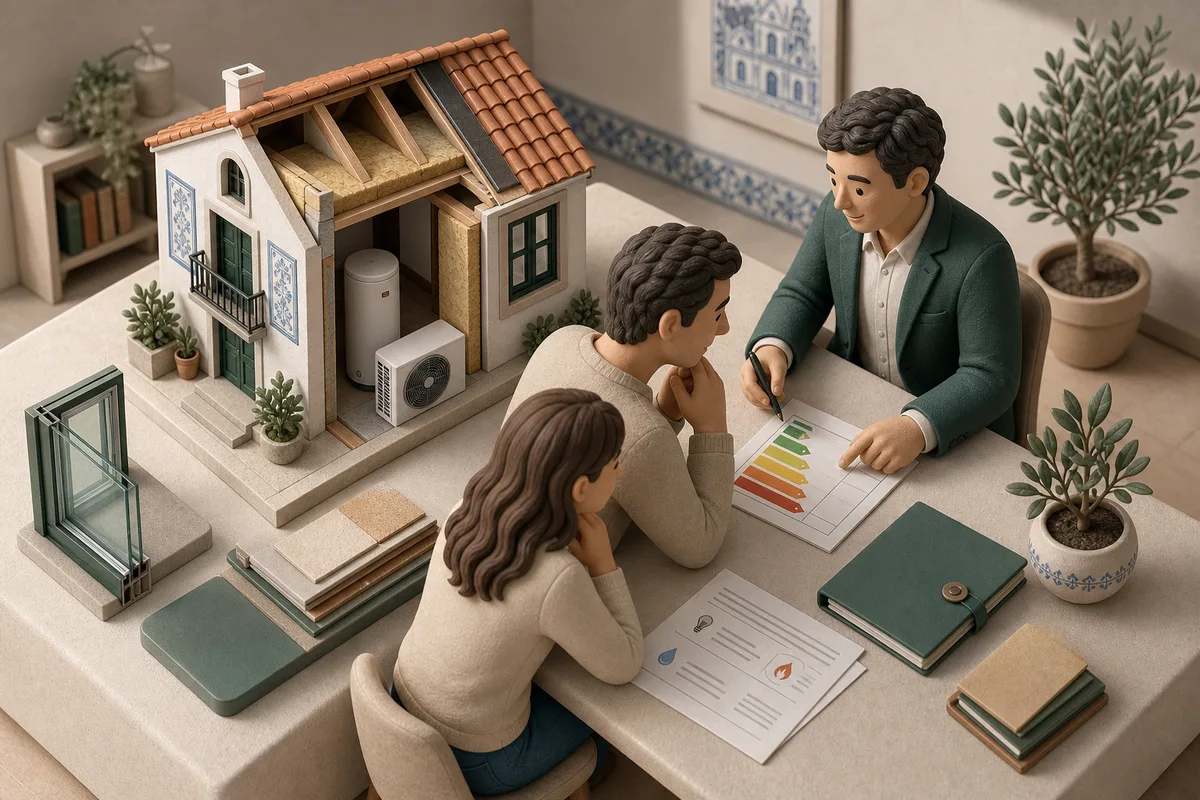
The Portuguese energy certificate is not just a letter in the listing. For a home buyer, it is a due-diligence document that should be read before the CPCV, while there is still room to ask questions, negotiate the price or write conditions into the contract.
The rating helps, but it is not enough. The buyer should check whether the certificate is valid, whether it matches the exact property being bought, which heating and hot-water systems were considered, and which improvement measures may turn into the next renovation bill.
Key takeaways
- Ask for the full certificate PDF before signing the CPCV.
- Check the SCE number, validity, address, fraction and match with the real property.
- Read the improvement measures as a first list of future costs.
When to ask for the certificate
Ask for the energy certificate as soon as the purchase moves from browsing to serious negotiation. Do not wait until completion. Before the CPCV, you can still ask questions, request clarification, negotiate or decide that you need more time.
If the seller says it is "being handled", turn that into an objective point: when it will be delivered, by whom, and what happens if it reveals relevant inconsistencies.
What to check in validity and property match
Before interpreting the rating, make sure you are looking at the right document. In apartments, small errors in fraction, floor, door or area can make the analysis useless for the specific purchase.
Validity checklist
- SCE number and issue date;
- expiry date and whether a newer certificate exists;
- address, fraction, floor, door, typology and area;
- use stated in the document, such as housing;
- match with recent works, annexes, enclosed balconies or new equipment;
- identification of the qualified expert.
If the home was renovated, the windows were changed or new systems were added, ask the seller whether the certificate reflects the current condition. If the document describes a different home from the one you visited, treat that as a reason to ask before signing.
Read improvement measures as an initial budget
The most useful part for the buyer is often not the letter. It is the improvement measures. They show where the property loses performance and which works may be needed to improve comfort and costs.
| What appears | Practical question |
|---|---|
| Inefficient windows or glazing | How much would replacement cost, and are there condominium or facade rules? |
| Missing roof or wall insulation | Is this simple internal work or does it depend on common parts? |
| Inefficient hot water or climate system | What equipment exists, where is it installed and what maintenance does it need? |
| Solar, heat pump or other recommended solution | Is there space, permission and a real budget to do it? |
Not every measure is expensive. But do not assume that a suggested improvement is simple or immediate. In apartments, facades, roofs, outdoor AC units and panels may depend on condominium approval, municipal rules or technical constraints.
The rating does not tell the full comfort story
Two properties with the same rating can feel very different. Sun orientation, floor, wind exposure, humidity, shading, ventilation and actual equipment use all change the lived experience.
Questions during the visit
- is the home cold in winter or too hot in summer?
- is there condensation, mould, damp smell or cold walls?
- are the windows single, double or thermal-break frames?
- how is hot water produced: gas, electric cylinder, heat pump or another system?
- is there heating, AC, fireplace or only portable equipment?
- can the seller show electricity or gas bills from cold and hot months?
Bills do not replace the certificate because they depend on habits. But they help you understand whether the home is comfortable at reasonable cost or whether you may inherit a monthly expense that is hard to see at the viewing.
How to bring this into the CPCV
If the certificate has not been delivered, does not seem to match the property or reveals relevant works, do not leave the issue until completion. The CPCV should state what was delivered and which seller statements the buyer relied on.
Points to discuss
- seller statement that the energy certificate is valid and matches the property sold;
- delivery of the full PDF before or on the CPCV signing date;
- list of included systems: heating, AC, hot water, panels;
- confirmation of recent works affecting windows, insulation or technical systems;
- deadline to clarify discrepancies before completion.
When an improvement measure is essential to your decision, ask for a quote before closing the price. A home that "only needs new windows" may be a small expense or a project that depends on facade rules, condominium approval and timing.
FAQ
Can I sign the CPCV without seeing the certificate?
Does a low energy rating stop the purchase?
Are improvement measures mandatory?
Next step
Before the CPCV, ask for the full energy certificate and read it while the visit is still fresh. If the rating, systems or improvement measures do not match what you saw, clarify it in writing before paying the deposit.
More guides
August 7, 2026
Damp and water ingress: investigate before the CPCV
How to record signs, diagnose the source, check the condominium and require proof of repair before buying a home in Portugal.
August 5, 2026
Electrical installation when buying: check before the CPCV
How to check the electrical file, condition, power capacity and responsibilities before buying a home in Portugal.