Final inspection before completion: buyer checklist
How to compare a Portuguese home with the CPCV, record damage and resolve differences before paying the balance and taking the keys.
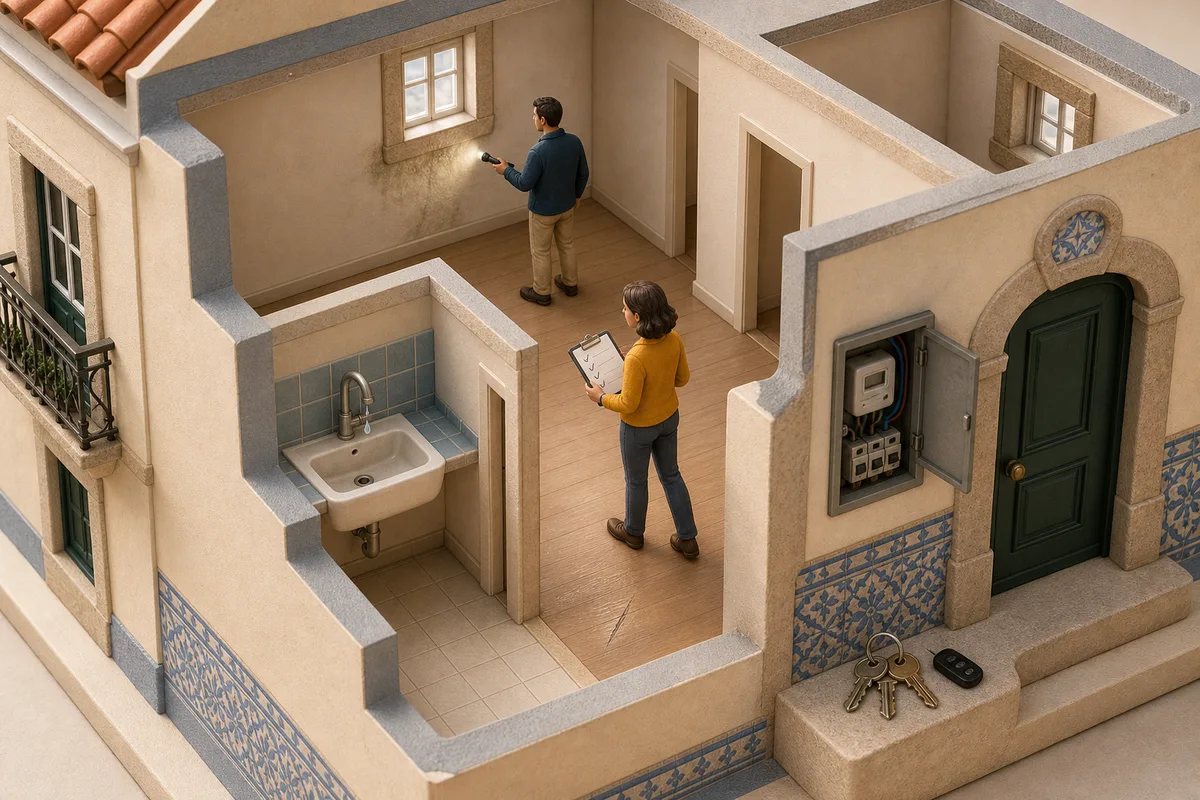
The home you viewed weeks ago may not be the home you receive at completion. A rushed move can cause damage, an included appliance can disappear, and a promised repair may still be unfinished.
The final inspection compares the empty property with what was agreed. It does not replace a technical survey or decide, by itself, whether you should complete: it produces facts to resolve before paying the balance and accepting the keys.
Key takeaways
- Compare the home with the CPCV, annexes, inventory and written repairs, not only your memory of the first viewing.
- Inspect after the property is empty and close enough to completion to catch late changes.
- Document differences and take them to your lawyer or solicitor before changing the price, date or payment.
First, define what you are comparing
Bring the CPCV and its annexes. Add the inventory, dated photographs, plan, messages accepted by both parties and the list of promised works or repairs. A listing sentence or a saved phone photograph may explain the context, but does not replace the signed agreement.
Portugal’s Civil Code identifies transfer, delivery and payment as essential effects of sale. The delivery rule says the thing must be delivered in the state it was in at the time of sale and, unless agreed otherwise, includes integral parts and documents relating to it.
This does not mean every object seen months earlier is included. An integral part is materially attached to the property with permanence; loose furniture and appliances should appear in a clear inventory.
| Check | Purpose | Useful timing |
|---|---|---|
| Technical survey | Investigate construction, damp, systems and defects in depth. | Before assuming CPCV risk, with a competent professional. |
| Final inspection | Confirm condition, contents, vacancy and repairs against the agreed baseline. | With the home empty, shortly before completion. |
| Legal and document review | Confirm title, burdens, pending registrations, tax and completion documents. | Updated through completion by the transaction professional. |
Agree access before the date arrives
There is no universal rule requiring an inspection 24 or 48 hours beforehand. Access, timing, attendance and what happens if there is a problem should be agreed and, ideally, addressed in the CPCV.
Try to visit after the seller removes their belongings. Walls, floors, cupboards and storage then become visible. Inspect close to completion but leave real time to send evidence and receive instructions from your lawyer or solicitor. If the visit happened too early, recheck the essentials when the keys are handed over.
Request access to everything you are buying: home, balcony, garage, parking space, storage, garden and exclusive-use areas. Also confirm that people, pets and belongings that should leave no longer occupy the property.
Walk through in the same order every time
Start outside and continue room by room. Do not dismantle equipment or carry out dangerous tests. If gas is disconnected, an electrical panel looks unsafe or there are signs of a leak, stop and request the appropriate intervention.
Final inspection checklist
- Confirm the home and annexes are vacant and free of debris not agreed to remain.
- Compare walls, ceilings, floors, glass, doors and windows with the photographs and CPCV.
- Look for new water, damp, mould, cracks, impacts or moving damage.
- Open and close doors, windows, shutters and gates where safe.
- Test taps, toilets and drains and observe visible leaks.
- Check power, sockets and fixed equipment only where conditions are safe.
- Verify every promised repair and request evidence when the result is not visible.
- Check furniture, appliances, lights and other items identified in the inventory.
- Inspect the garage, storage, balcony, garden and exclusive-use areas.
- Count keys, remotes, cards and codes and identify the meters.
Bring a phone charger, small torch, absorbent cloth, tape measure and your printed or digital list. A phone charger does not certify the electrical installation; it is only a limited functional test.
Record facts, not diagnoses
Take a wide photograph of each room, then each difference. Include a reference point and retain the original dated files. A continuous video may show the route, but focused photographs make each issue easier to identify.
Prepare a short note with:
- date, time, property and people present;
- areas visited and areas not accessible;
- differences observed without exaggeration;
- associated photographs;
- items delivered and missing;
- the seller’s or representative’s response.
Write “damp mark approximately 30 cm wide beside the window”, not “structural leak”, if no professional has determined the cause. Send the note to the professional handling your purchase that day and preserve the written reply.
If you find a problem, do not improvise at completion
A failed bulb, an incomplete contractual repair and an occupied home do not carry the same weight. The CPCV, evidence, seriousness and available time shape the options.
| Situation | Prudent next step | Avoid |
|---|---|---|
| Question or minor item | Record it, clarify in writing and confirm the agreed handover. | Turning an assumption into an allegation. |
| Missing repair or contractual item | Ask the lawyer for a written solution with owner, evidence and deadline. | Accepting only “we will sort it later”. |
| New damage, occupation or material difference | Pause coordination and obtain legal, lender and completion-professional instructions. | Cancelling, withholding funds or changing the price unilaterally. |
Depending on the contract and professionals involved, the parties may agree a repair before completion, a new date, a documented price change, a formal retention accepted by the lender and completion professional, or a precise post-completion obligation. None should emerge from a corridor conversation. The lender may also need to review a change to the price or transaction.
For a serious issue, your lawyer should assess the CPCV and legal rights. Do not assume an inspection automatically creates a right to withdraw or recover the deposit.
Finish with a simple handover record
On completion or handover day, confirm nothing has changed since the inspection. List door and mailbox keys, garage remotes, cards, codes, manuals and warranties. Photograph the identifier and reading of water, electricity and gas meters where present.
ERSE explains that billing may use estimates without an actual reading. A photograph does not transfer the supply contract, but helps fix the handover reading; arrange the account change separately with each provider.
If both parties agree, sign a short record with date and time, readings, key count and outstanding reservations. Do not sign “without reservation” if the inspection note identifies an unresolved issue.
The physical check does not replace the final land-register or document review. Casa Pronta can complete the sale, mortgage and registrations in one procedure, but an empty home does not prove that burdens and pending requests have been handled.
Frequently asked questions
Must the seller allow a final inspection?
Does the final inspection replace a technical survey?
Can I retain part of the price for an unfinished repair?
What if the seller’s belongings are still in the home?
Does an existing home sold as seen make inspection pointless?
This guide is general information. Make decisions about delay, payment, retention, price changes or breach with a Portuguese lawyer or solicitor who has read the CPCV and reviewed the evidence.
More guides
July 21, 2026
After completion: your first 60-day checklist
What to do after buying a home: registration, meters, contracts, insurance, condominium, fiscal address and IMI in the first 60 days.
July 4, 2026
Key handover before completion: avoid late problems
What to check before accepting early keys or letting the seller stay after completion: possession, insurance, payment and CPCV clauses.